Author: 7i2wl2aeu796

  • Upper Delaware River Fishing Report — October 11, 2026

    Bottom Line

    The West Branch is still the most dependable water in the system, with small olives bringing fish up in the afternoon; the freestones and the East Branch are very low and need today’s rain.

    Upper Delaware River Fishing Report: Conditions

    The West Branch is the one river that keeps moving. Release changes took it from a daily average of 365 cfs at Hale Eddy a week ago to 856 cfs on Friday, and it has dropped sharply since: 420 cfs this morning, down from 637 on Saturday evening. The water is carrying its fall tint, which bothers neither the fish nor the hatches.

    Everything else is low. The East Branch is at 120 cfs at Harvard, the Beaverkill at 131 cfs at Cooks Falls, and the Willowemoc at about 31 cfs. All three are lower than they were two weeks ago, and each has edged up only slightly with the rain. The Main Stem is at 1,020 cfs at Lordville.

    For real-time flows, radar, and forecasts, check the Live Report — it’s the fastest way to know before you go.
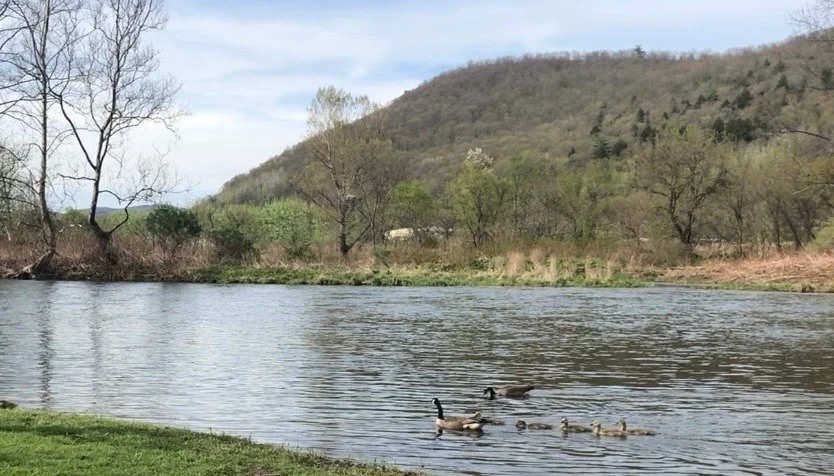
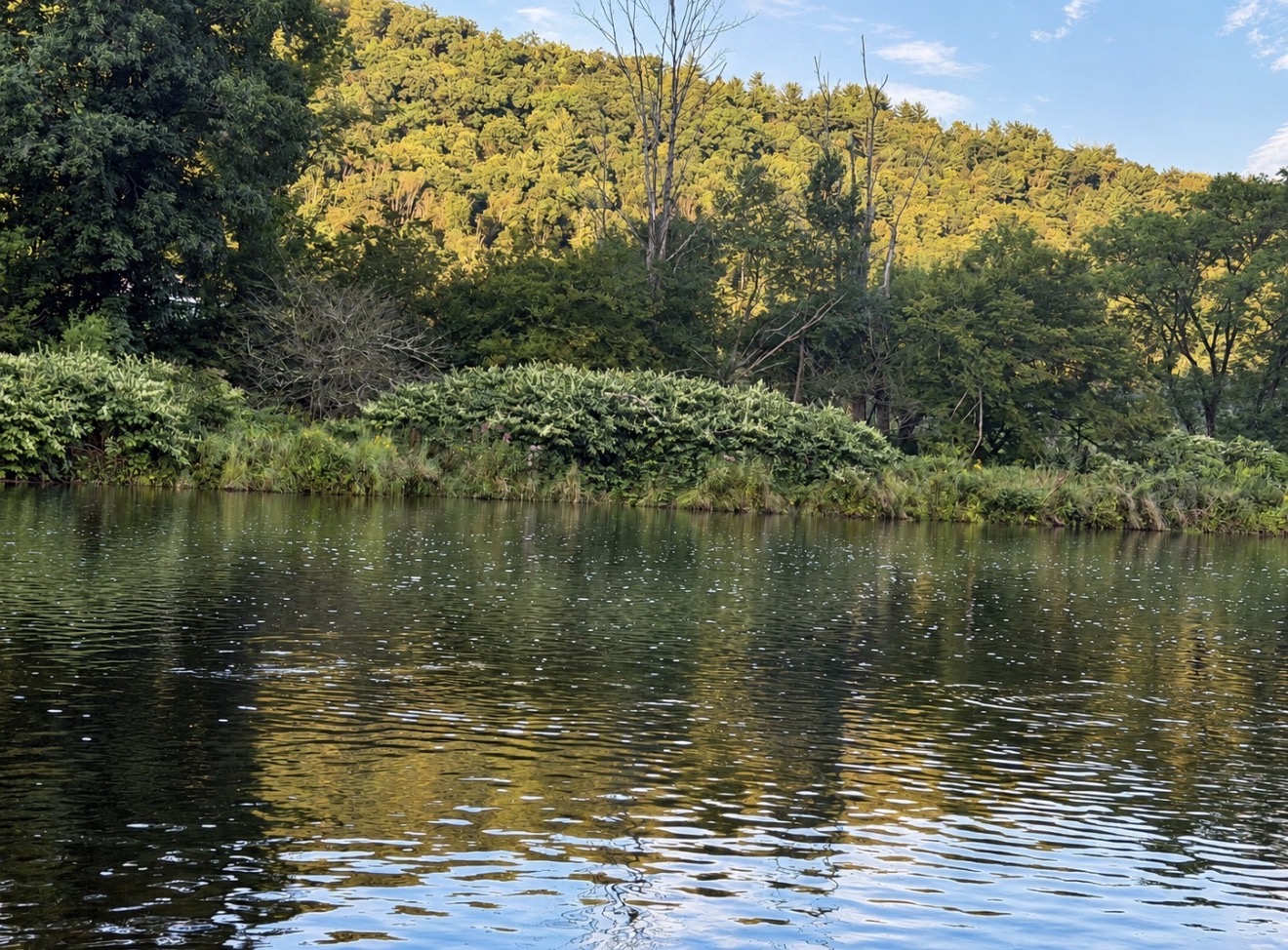
    Upper Delaware River under cloudy skies, October fishing report conditions

    What’s Hatching

    • Blue-Winged Olives — #16–22, mostly the small end
    • Hebes (Olive Sulphurs) — #16–20
    • Isonychia — #12–14
    • Light Cahill — #14–16
    • Tan Caddis — #14–18
    • Rusty Spinners — small, to match the olives

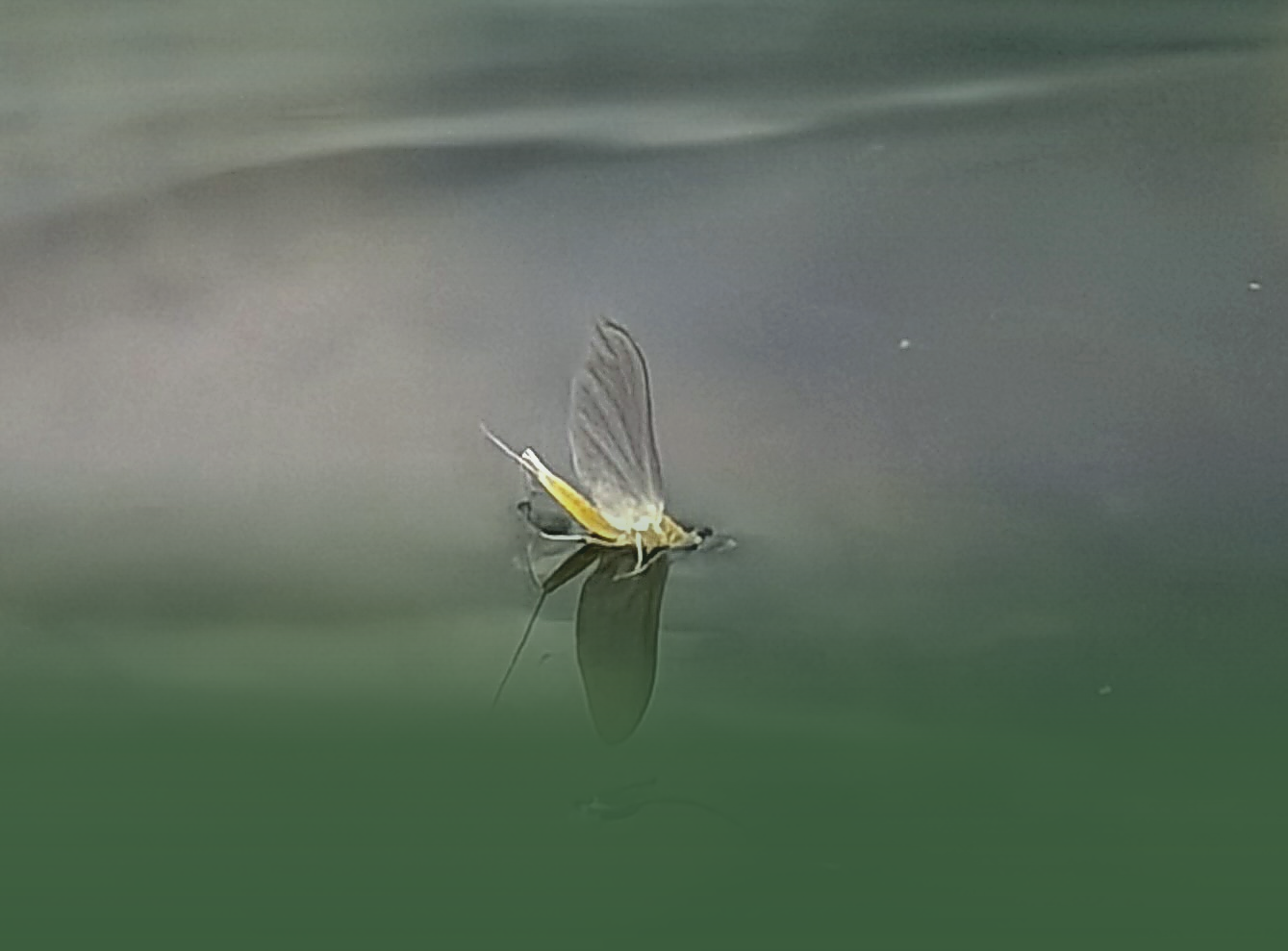
    Small olives are the hatch that matters on every branch, and cloudy afternoons bring the most of them. Isonychia are winding down but still show; Cahills, Hebes, and caddis are present in modest numbers. Small rusty spinners follow the olives late in the day.

    Today’s Watch Items

    • Rain through this afternoon and into tonight, ending around 11 p.m. Up to an inch in total. The Beaverkill and Willowemoc respond first; watch for a rise and some color
    • Clouds increase Monday, high near 68, light wind. It is also a holiday, so likely busy
    • Tuesday: showers possible in the afternoon, with showers and thunderstorms likely at night
    • Cooler after that: low 60s Thursday and Friday, with more showers Friday, and low 50s by Saturday
    • The West Branch dropped more than 200 cfs between Saturday evening and this morning. Check the gauge before you go

    Best Techniques

    Start below the surface. Mornings have belonged to nymphs and soft hackles, with pheasant tails and caddis pupae the standard picks. On the freestones and the East Branch, low clear water calls for the lightest rig that will get a small nymph down, and for a slow approach. With rain and low light in today’s forecast, and color already in the West Branch, keep a streamer rod rigged.

    Afternoons are the dry-fly window. Olives bring fish up from early afternoon on, and small spinners can keep them up late on the West Branch. Rising fish have been scarce at times, so cover water until you find them. When you do, the work is in the presentation: long leaders, fine tippet, and a downstream drift that shows the fish the fly before the leader.

    Fly of the Week

    Rusty Spinner
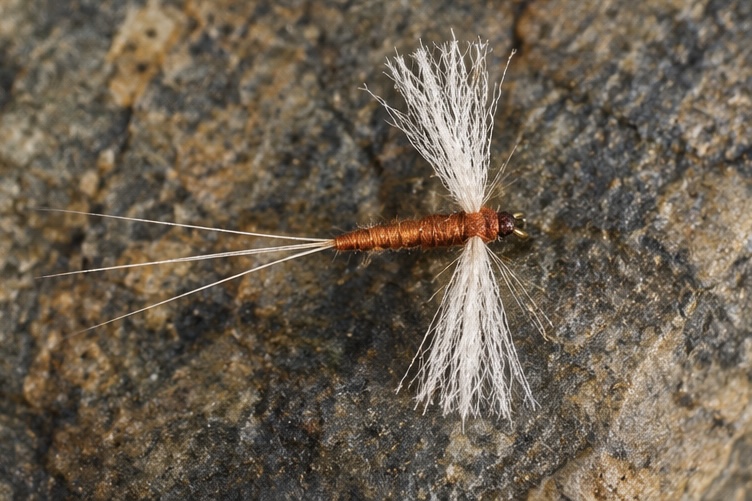
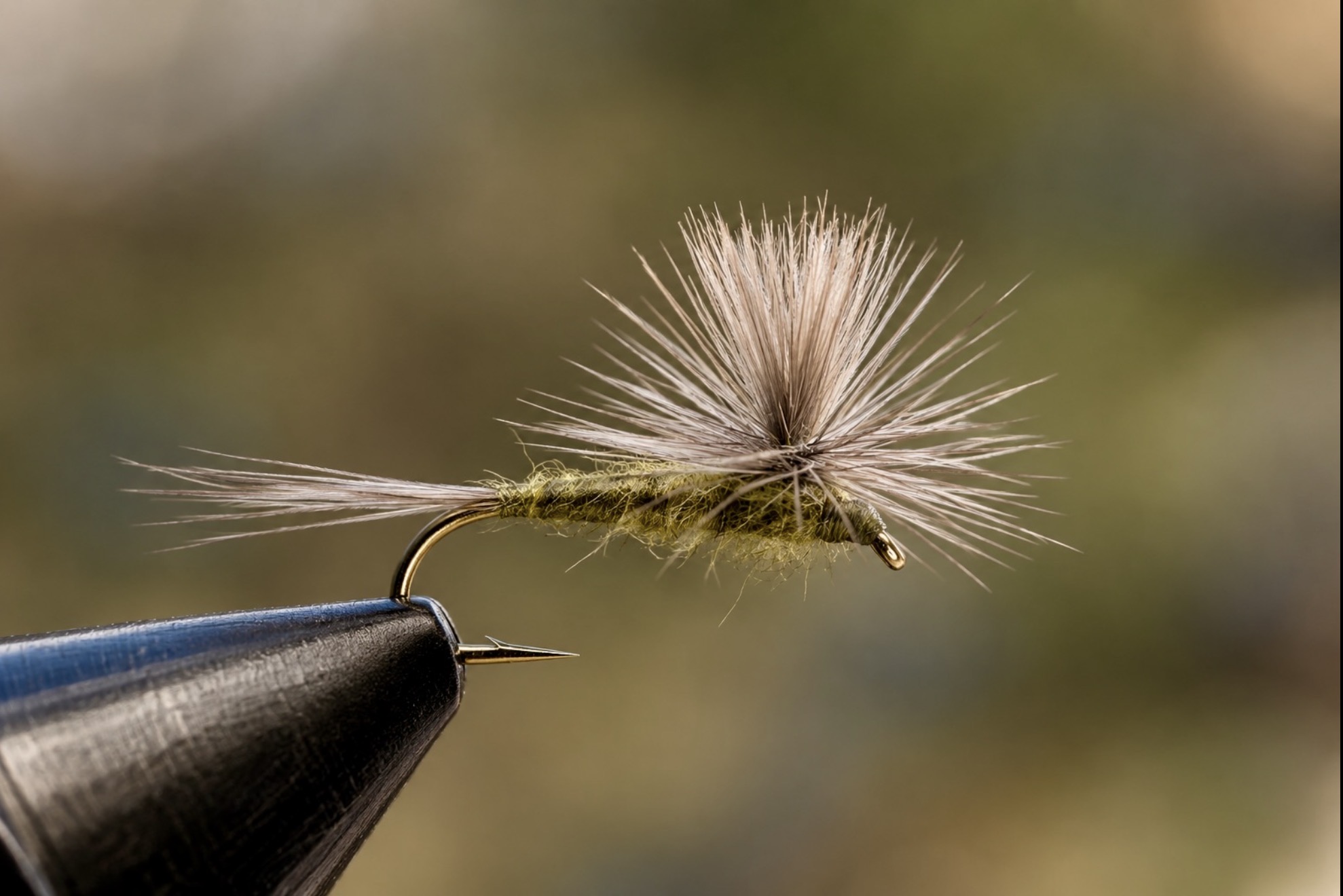
    Rusty Spinner dry fly close-up collage, Upper Delaware River fishing report fly of the week

    Dry Fly · Size #18–22 · Imitates spent Blue-Winged Olives (Baetis)

    What’s left of the hatch.

    Rust-brown body, split tails, wings tied flat. It sits flush in the film, which is how the naturals arrive once the olives have mated and fallen. Fish it on a dead drift to steady risers in slow water late in the afternoon. It is hard to see; trail it behind a larger dry if you lose track of it.

    See live conditions on the Live Report →

    Upper Delaware River fishing report, covering the West Branch, East Branch, Main Stem, and Beaverkill & Willowemoc. Flows, hatches, technique, and today’s watch items — everything you’d want to know before you string up a rod, gathered from conditions across the watershed.
  • Upper Delaware River Fishing Report — September 27, 2026

    Bottom Line

    Cool, gray weather is olive weather, and the West Branch is the most dependable choice — steady flows and fish that rise late in the day to small, well-presented flies. The freestones are fishable but low and technical.

    Upper Delaware River Fishing Report: Conditions

    So far the nor’easter has brought more wind than water to the upper watershed. The tailwaters are steady: the West Branch is at 576 cfs at Hale Eddy, the East Branch is at 457 cfs at Hancock and edging up slightly with the rain, and the Main Stem is at 1,240 cfs at Lordville.

    The freestones are the exception. The Willowemoc is running very low, near 40 cfs, and the Beaverkill picked up a little rain overnight but is still thin at 191 cfs. Both are fishable, but thin.

    For real-time flows, radar, and forecasts, check the Live Report — it’s the fastest way to know before you go.

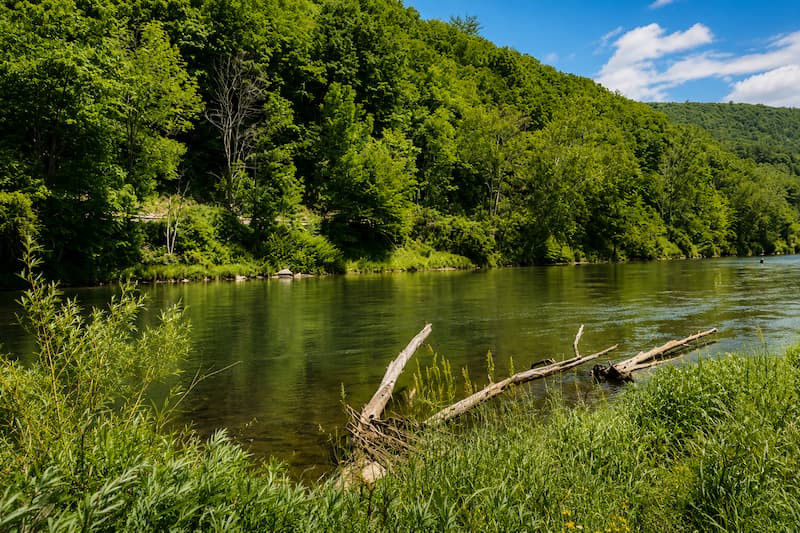
    Upper Delaware River in late September, fishing report conditions

    What’s Hatching

    • Blue-Winged Olives — #18–22
    • Hebes (Olive Sulphurs) — #16–20
    • Isonychia — #12–14
    • Light Cahill — #14–16
    • Tan Caddis — #16–18
    • Flying Ants — #16–20

    Olives are the main hatch across the system, heaviest on cloudy, damp afternoons and again near dark. Hebes follow late in the day; Isonychia, Cahills, and caddis are present in small numbers. Spinners in a range of sizes fall in the last light, especially on the West Branch.

    Today’s Watch Items

    • More rain Monday — about 0.2″ forecast, highs near 60. Watch the Beaverkill and East Branch for further rise or color
    • Northeast wind with gusts near 25 mph Monday — look for sheltered banks for small-fly work
    • Low freestones mean wary fish — approach slowly and let a pool settle before casting
    • Highs reach the low 70s Wednesday and Thursday with more sun; brighter days have pushed hatch activity later

    Best Techniques

    Nymphs and soft hackles carry the mornings and bright middays. On the freestones, a small beadhead nymph under a buoyant dry covers two levels without disturbing thin water. On overcast afternoons, watch the soft water and seams for olives — the naturals are small, so fish a pattern you can actually see.

    Stay until dark. The final hour has been the most reliable dry-fly window, especially on the West Branch, where small olives and spinners overlap. Long leaders, fine tippet, and drag-free drifts matter more than usual; refusals are common, and a cleaner drift usually does more than a new fly. Rain and low light give streamers a window.

    Fly of the Week

    Parachute BWO

    Parachute Blue-Winged Olive dry fly, Upper Delaware River fishing report fly of the week

    Dry Fly · Size 20

    Small fly, easy to see.

    Dun body, light post, sparse hackle — small enough to match the naturals and visible enough to track in flat evening light. Fish it alone on 6X to rising fish, or trail it behind a larger dry when searching.

    See live conditions on the Live Report →

    Upper Delaware River fishing report, covering the West Branch, East Branch, Main Stem, and Beaverkill & Willowemoc. Flows, hatches, technique, and today’s watch items — everything you’d want to know before you string up a rod, gathered from conditions across the watershed.
  • Labor Day Wrap-Up: Upper Delaware Fishing Report, Sept. 7

    Bottom Line

    The system closes out the holiday weekend in good, improving shape — a solid setup heading into the week ahead.

    Upper Delaware River Fishing Report: Conditions

    Closing out Labor Day with the system in good shape. The West Branch has settled nicely — Hale Eddy at 705 cfs and Stilesville at 491 — both sitting in comfortable wading range after last week’s storm spike. The East Branch is at 269 cfs at Harvard and 1,250 cfs at Hancock, the Main Stem at Lordville is at 2,240 cfs, and the Beaverkill at Cooks Falls has come down to 548. All four are still a shade above where they’d normally sit this time of year, but the trend all day has been down and clearing, which is exactly what you want heading into a new week.

    Today’s bright sun kept the bite concentrated at the edges of the day rather than spread evenly through it — the kind of pattern worth expecting again as we move into a stretch of typical early-September weather.

    For real-time flows, radar, and forecasts, check the Live Report — it’s the fastest way to know before you go.

    What’s Hatching

    • Blue-Winged Olives — #16–18
    • Sulphurs — #16–20
    • Light Cahill — #14–16
    • Isonychia — #10–12
    • Tan Caddis — #16–20

    The lineup has been remarkably steady for the better part of a week now, holiday or not. Flying ants are still worth a few slots in the box too, especially on warm afternoons.

    Today’s Watch Items

    • Flows are still trending down system-wide from last week’s storms — recheck before assuming a stretch that was too high is still off-limits
    • Expect continued bright, high-sun days this week to keep pushing the best action toward morning and evening
    • With the holiday traffic clearing out, pressure on popular access points should ease up heading into the week

    Best Techniques

    If this week shapes up anything like today, plan around the same rhythm — streamers in the early morning and again once the sun drops, nymphs and wets to carry you through the bright middle hours, and Cahills or Isonychia to bring fish up as things cool into the evening.

    With flows still easing down day by day since last week’s storms, water that felt marginal a few days ago may open back up for wading as the week goes on — worth rechecking rather than assuming last week’s read still holds.

    Fly of the Week

    Cahill

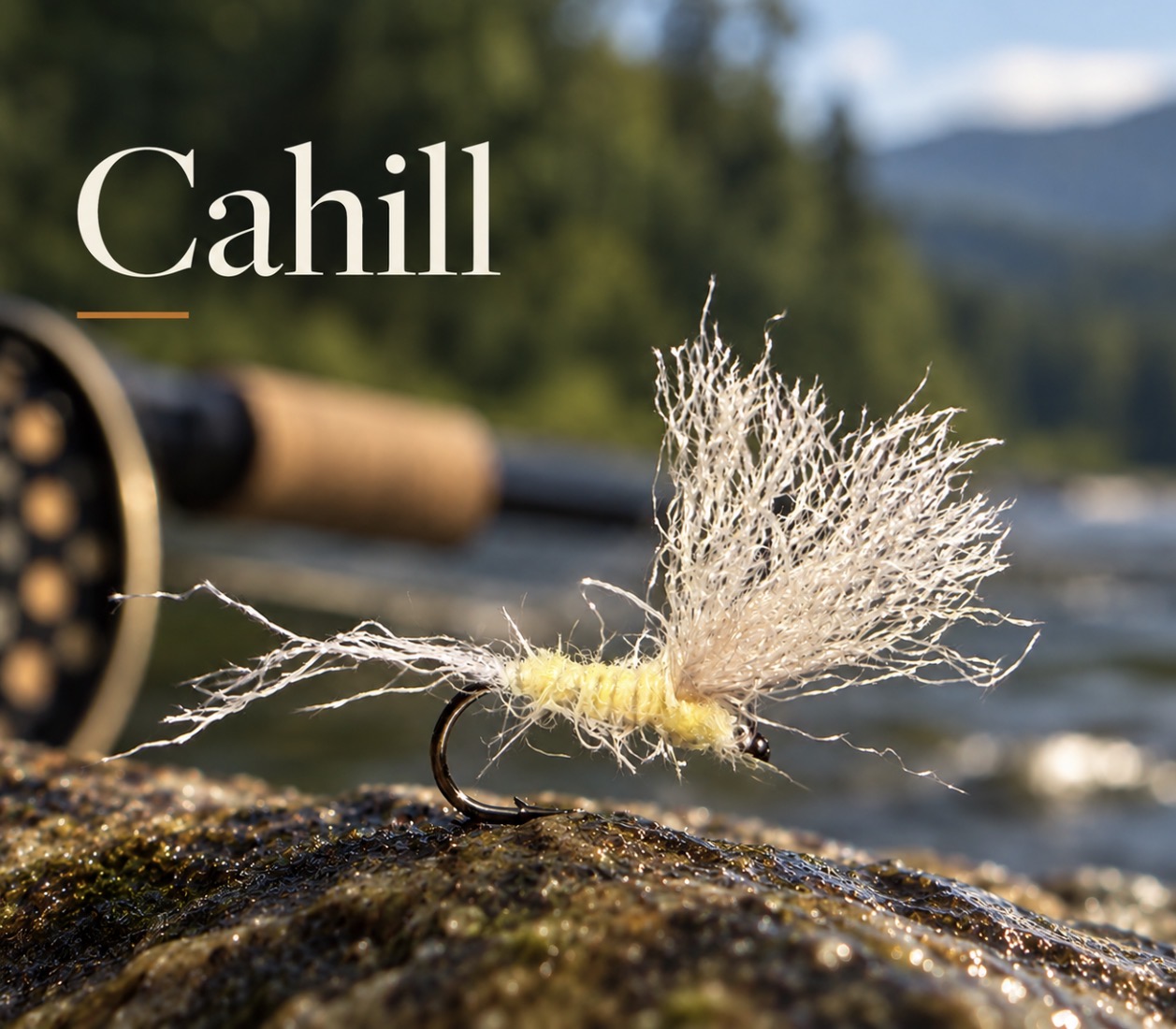
    Light Cahill dry fly, Upper Delaware River fishing report fly of the week

    Dry Fly · Size 14

    Simple profile, does the job.

    Still holding strong as the evening standby heading into the week — a reliable pick as Cahills continue showing up in the lower river’s last-light window.

    See live conditions on the Live Report →

    Upper Delaware River fishing report, covering the West Branch, East Branch, Main Stem, and Beaverkill & Willowemoc. Flows, hatches, technique, and today’s watch items — everything you’d want to know before you string up a rod, gathered from conditions across the watershed.
  • West Branch Clearing After Overnight Storms — Upper Delaware Report, Sept. 5

    Bottom Line Upper Delaware River fishing report: West Branch drops fast after storms, rest of system still clearing. Hatches, technique, and fly pick.

    Upper Delaware River Fishing Report: Conditions

    A round of overnight storms pushed every gauge in the system up this week, but the West Branch is already coming back down faster than expected — Hale Eddy has dropped to 895 cfs this morning, putting some stretches back into wadable range after a couple of boat-only days. Still worth scouting before you commit; not every section clears and drops evenly.

    The East Branch is running high at Harvard — 350 cfs this morning — and still off-color. The Main Stem is carrying a lot of extra water too, with Lordville at 3,950 cfs; not a wading proposition yet, but a fine one if you’ve got a boat and don’t mind stripping streamers through the stain. The Beaverkill at Cooks Falls is at 1,030 cfs — well up for a freestone, though it should settle faster than the tailwaters once the rain clears the system.

    For real-time flows, radar, and forecasts, check the Live Report — it’s the fastest way to know before you go.

    What’s Hatching

    • Blue-Winged Olives — #16–18
    • Sulphurs — #16–20
    • Light Cahill — #14–16
    • Isonychia — #10–12
    • Tan & Grey Caddis — #16–20

    The bug calendar hasn’t missed a beat despite the high water — this spread is showing up consistently enough across the system that it’s worth carrying a full box rather than betting on just one pattern. Flying ants are still around on warm afternoons too.

    Today’s Watch Items

    • West Branch is dropping fast but unevenly — scout a stretch before committing to wading it
    • East Branch, Main Stem, and Beaverkill are still high and off-color — boat and streamer territory for now
    • Flows are changing quickly this week — check the Live Report for current numbers before you head out

    Best Techniques

    Where water’s still up and stained, swing streamers with confidence — high, off-color water on this system has a way of putting big fish in a mood. On the recovering stretches of the West Branch, keep a streamer rig as backup even if you’re planning to wade, since not every run has cleared evenly yet.

    As flows keep settling, last light remains the most reliable window for consistent dry fly activity as bugs and spinners pile up in low light — a good bet to build your evening around as the system clears.

    Fly of the Week

    Cahill

    Light Cahill dry fly pattern, close-up on rock

    Dry Fly · Size 14

    Simple profile, does the job.

    Cahills are around in decent numbers right now — a solid pick for covering water once the system finishes clearing.

    See live conditions on the Live Report →

    Upper Delaware River fishing report, covering the West Branch, East Branch, Main Stem, and Beaverkill & Willowemoc. Flows, hatches, technique, and today’s watch items — everything you’d want to know before you string up a rod, gathered from conditions across the watershed.
  • West Branch Holding Steady — August 21 Field Report

    Bottom Line

    The West Branch continues to fish well — give the smaller freestones room to cool off before you commit.

    Upper Delaware River Fishing Report: Conditions

    Conditions on the West Branch are solid — Stilesville is a confirmed 560 cfs and 47°F, Hale Eddy is running 663 cfs and 49°F, and both numbers reflect a stable, unchanged release rather than a spike or drop. Wading is comfortable throughout, and there’s still some algae on the upper stretch — dry flies are the better bet up there for now.

    Upper Delaware River fishing report conditions on the West Branch

    Downriver, the Main Stem is sitting right around its typical level for this date — Lordville’s 1,420 cfs lines up almost exactly with the historical median, so nothing unusual is happening there, just a normal late-August read with warmer water than the tailwater sections upstream. Hancock is running 628 cfs and 64°F, and last night’s cooler air and cloud cover took some of the edge off water temps on the Main Stem, East Branch, and Beaverkill heading into today. The Beaverkill itself is still thin at Cooks Falls — 392 cfs, 61°F — so it and the Willowemoc need a careful approach once the sun’s had time to warm them up.

    For real-time flows, radar, and forecasts, check the Live Report — it’s the fastest way to know before you go.

    What’s Hatching

    • Sulphurs — #18–20
    • Isonychia — #10–12
    • Light Cahill — #14–16
    • Flying Ants — #16–18

    Sulphurs are winding down for the season — what’s left is spotty and smaller, concentrated on the upper West Branch through early afternoon. Isonychia and Cahills are around in decent numbers, and flying ants are showing up too — worth carrying, since they can save an otherwise slow stretch.

    Today’s Watch Items

    • Upper West Branch algae is still present — plan for dry flies up there rather than a nymph rig
    • Carry a thermometer on the Beaverkill and Willowemoc — flows are thin and afternoon sun can still push temps into risky territory despite the cooler start
    • West Branch flows have been genuinely flat today, not just an unreported gauge — worth confirming yourself before you head out

    Best Techniques

    Isonychia and Cahill patterns are worth prospecting today, especially once the midday Sulphur window closes — a good option for covering water when nothing’s actively rising. Morning nymphing ahead of any hatch remains solid on the West Branch, just keep it to the lower river given the upper stretch’s algae.

    When Sulphurs do show, these late-season fish have seen plenty of traffic, so lean on emergers, cripples, and soft-hackle droppers over a straight dun. Early and late are still your highest-percentage windows as the hatch thins, so build your day around those edges rather than the midday lull.

    Fly of the Week

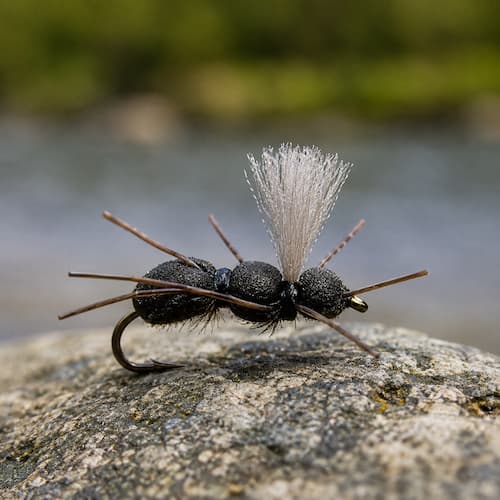
    Flying Ant

    Flying ant dry fly pattern, close-up on rock

    Terrestrial · Sizes 16–18

    Simple profile, does the job.

    With naturals showing up along the banks, this is a smart searching pattern for the slower stretches between hatches — especially with the Sulphur hatch thinning out for the season.

    See live conditions on the Live Report →

    Upper Delaware River fishing report, covering the West Branch, East Branch, Main Stem, and Beaverkill & Willowemoc. Flows, hatches, technique, and today’s watch items — everything you’d want to know before you string up a rod, gathered from conditions across the watershed.
  • West Branch Cooling and Clearing — August 15 Field Report

    Bottom Line

    Cool and clear on the West Branch, warm and thin everywhere else — plan around the edges of the day, not the middle.

    Upper Delaware River Fishing Report: Conditions

    The West Branch has settled back toward baseline after last week’s rain bump — flows spiked and have been easing down since, with clear water and good wading throughout. The Main Stem is carrying more volume and running noticeably warmer, typical for mid-August.

    The East Branch, Beaverkill, and Willowemoc have all thinned out considerably after the dry stretch — several sections are down to skinny freestone flows and warmer than you’d want to push a fish in.

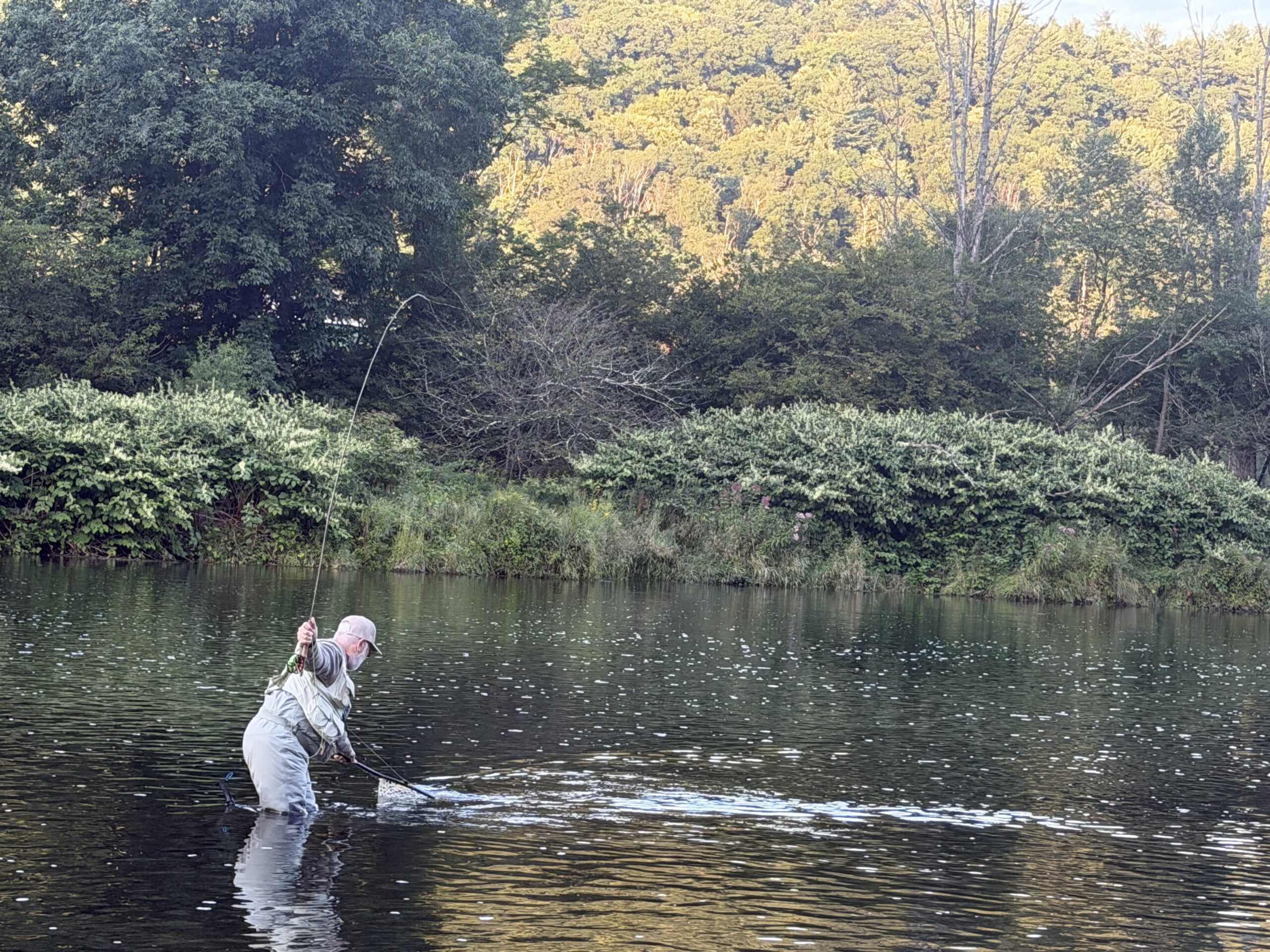
    Upper Delaware River fishing report conditions on the West Branch

    Afternoon storms have been rolling through on and off, keeping flows twitchy rather than stable — check a gauge before you head out rather than trusting yesterday’s numbers. For real-time flows, radar, and forecasts, check the Live Report — it’s the fastest way to know before you go.

    What’s Hatching

    • Sulphurs — #16–20
    • Dark Blue-Winged Olives — #16–20
    • Light Cahill — #14–16
    • Isonychia — #10–14

    Sulphurs remain the backbone of the day — reliable around midday on the lower stretches and again in the evening system-wide. Caddis are around but playing a secondary role right now. Expect the standard late-summer pattern: a quieter midday window bookended by better action at both ends of the light.

    Today’s Watch Items

    • The Beaverkill’s Acid Factory section remains closed as a thermal refuge through the end of August — give that water a pass entirely
    • Some smaller tributary and private-water sections have gone into summer shutdown as flows and temps climbed — if a spot feels off-limits or posted differently than usual, that’s likely why
    • Carry a thermometer on the Beaverkill and Willowemoc especially, and be ready to walk away from water pushing past the high 60s

    Best Techniques

    Surface windows are real but narrow this time of year, so a clean drag-free drift and a downstream-first presentation will get you further than fly selection alone. When nothing’s rising, a two-fly nymph rig fished near the bottom is a solid default, and in the clearer low water, downsizing your streamer profile tends to outperform going bigger.

    When the sun’s high, give the pressured, open water a rest and put your time into slower, structure-heavy holding water instead — that’s where fish sit tight through the worst of the heat. Early and late are still your highest-percentage windows system-wide, so if you can only fish part of the day, build your trip around first light or last light rather than the middle hours.

    Fly of the Week

    The Sulphur

    Sulphur dry fly pattern, close-up on gradient background

    Ephemerella dorothea · Sizes 16–18

    Pale yellow, honest profile.

    Matching the hatch driving both the midday and evening action across the system right now — a dependable first choice when fish are up.

    See live conditions on the Live Report →

    Upper Delaware River fishing report, covering the West Branch, East Branch, Main Stem, and Beaverkill & Willowemoc. Flows, hatches, technique, and today’s watch items — everything you’d want to know before you string up a rod, gathered from conditions across the watershed.