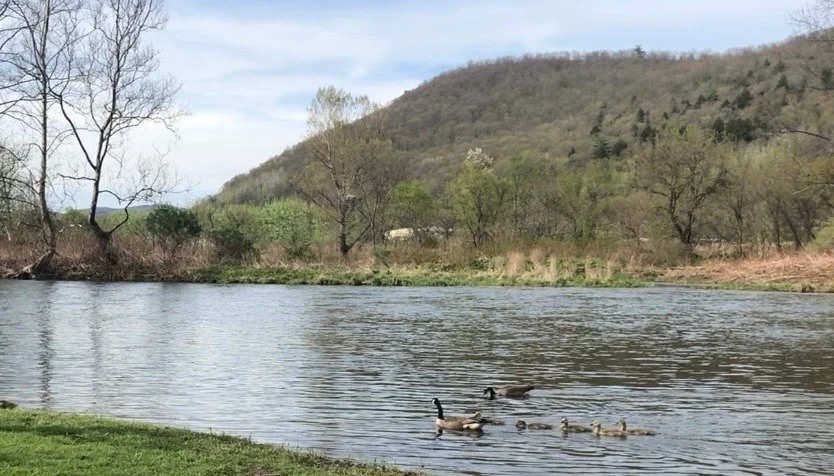
The West Branch is still the most dependable water in the system, with small olives bringing fish up in the afternoon; the freestones and the East Branch are very low and need today’s rain.
Upper Delaware River Fishing Report: Conditions
The West Branch is the one river that keeps moving. Release changes took it from a daily average of 365 cfs at Hale Eddy a week ago to 856 cfs on Friday, and it has dropped sharply since: 420 cfs this morning, down from 637 on Saturday evening. The water is carrying its fall tint, which bothers neither the fish nor the hatches.
Everything else is low. The East Branch is at 120 cfs at Harvard, the Beaverkill at 131 cfs at Cooks Falls, and the Willowemoc at about 31 cfs. All three are lower than they were two weeks ago, and each has edged up only slightly with the rain. The Main Stem is at 1,020 cfs at Lordville.
For real-time flows, radar, and forecasts, check the Live Report — it’s the fastest way to know before you go.
What’s Hatching
- Blue-Winged Olives — #16–22, mostly the small end
- Hebes (Olive Sulphurs) — #16–20
- Isonychia — #12–14
- Light Cahill — #14–16
- Tan Caddis — #14–18
- Rusty Spinners — small, to match the olives
Small olives are the hatch that matters on every branch, and cloudy afternoons bring the most of them. Isonychia are winding down but still show; Cahills, Hebes, and caddis are present in modest numbers. Small rusty spinners follow the olives late in the day.
Today’s Watch Items
- Rain through this afternoon and into tonight, ending around 11 p.m. Up to an inch in total. The Beaverkill and Willowemoc respond first; watch for a rise and some color
- Clouds increase Monday, high near 68, light wind. It is also a holiday, so likely busy
- Tuesday: showers possible in the afternoon, with showers and thunderstorms likely at night
- Cooler after that: low 60s Thursday and Friday, with more showers Friday, and low 50s by Saturday
- The West Branch dropped more than 200 cfs between Saturday evening and this morning. Check the gauge before you go
Best Techniques
Start below the surface. Mornings have belonged to nymphs and soft hackles, with pheasant tails and caddis pupae the standard picks. On the freestones and the East Branch, low clear water calls for the lightest rig that will get a small nymph down, and for a slow approach. With rain and low light in today’s forecast, and color already in the West Branch, keep a streamer rod rigged.
Afternoons are the dry-fly window. Olives bring fish up from early afternoon on, and small spinners can keep them up late on the West Branch. Rising fish have been scarce at times, so cover water until you find them. When you do, the work is in the presentation: long leaders, fine tippet, and a downstream drift that shows the fish the fly before the leader.
Fly of the Week
Rusty Spinner
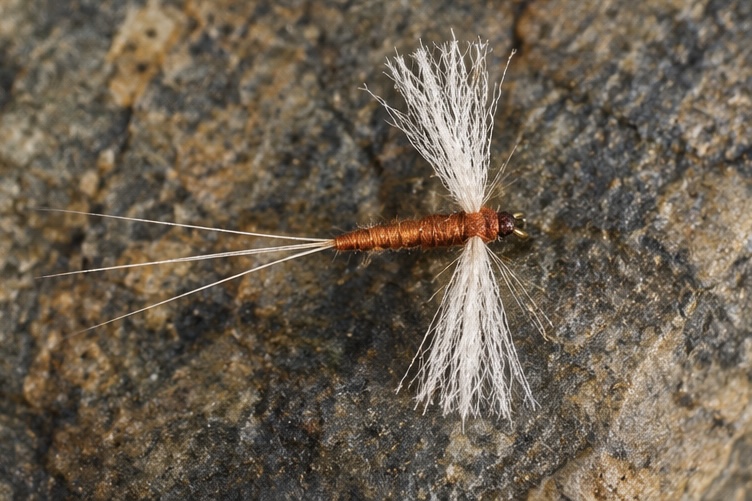
Dry Fly · Size #18–22 · Imitates spent Blue-Winged Olives (Baetis)
What’s left of the hatch.
Rust-brown body, split tails, wings tied flat. It sits flush in the film, which is how the naturals arrive once the olives have mated and fallen. Fish it on a dead drift to steady risers in slow water late in the afternoon. It is hard to see; trail it behind a larger dry if you lose track of it.
See live conditions on the Live Report →Upper Delaware River fishing report, covering the West Branch, East Branch, Main Stem, and Beaverkill & Willowemoc. Flows, hatches, technique, and today’s watch items — everything you’d want to know before you string up a rod, gathered from conditions across the watershed.
Leave a Reply