Cool, gray weather is olive weather, and the West Branch is the most dependable choice — steady flows and fish that rise late in the day to small, well-presented flies. The freestones are fishable but low and technical.
Upper Delaware River Fishing Report: Conditions
So far the nor’easter has brought more wind than water to the upper watershed. The tailwaters are steady: the West Branch is at 576 cfs at Hale Eddy, the East Branch is at 457 cfs at Hancock and edging up slightly with the rain, and the Main Stem is at 1,240 cfs at Lordville.
The freestones are the exception. The Willowemoc is running very low, near 40 cfs, and the Beaverkill picked up a little rain overnight but is still thin at 191 cfs. Both are fishable, but thin.
For real-time flows, radar, and forecasts, check the Live Report — it’s the fastest way to know before you go.
What’s Hatching
- Blue-Winged Olives — #18–22
- Hebes (Olive Sulphurs) — #16–20
- Isonychia — #12–14
- Light Cahill — #14–16
- Tan Caddis — #16–18
- Flying Ants — #16–20
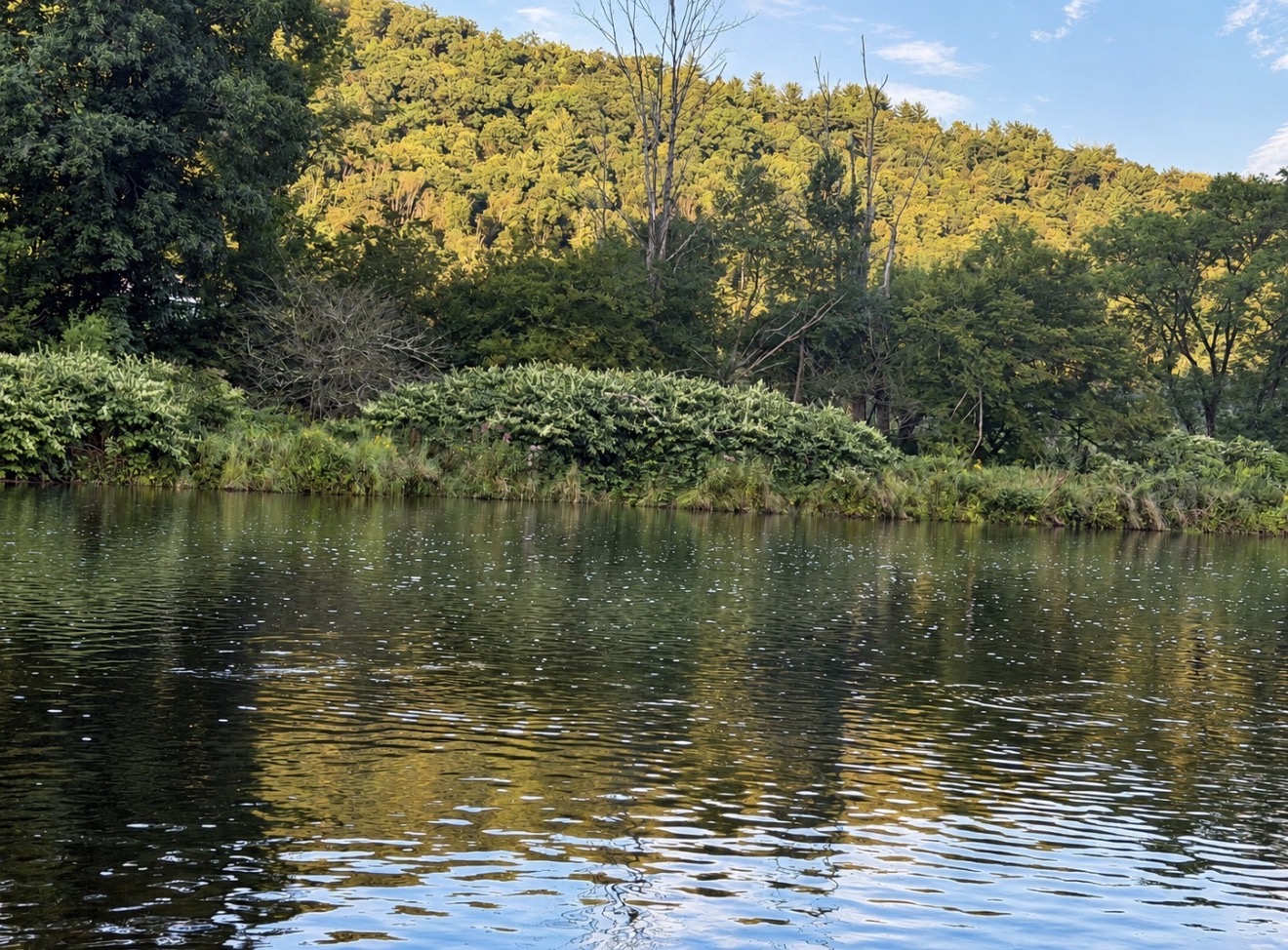
Olives are the main hatch across the system, heaviest on cloudy, damp afternoons and again near dark. Hebes follow late in the day; Isonychia, Cahills, and caddis are present in small numbers. Spinners in a range of sizes fall in the last light, especially on the West Branch.
Today’s Watch Items
- More rain Monday — about 0.2″ forecast, highs near 60. Watch the Beaverkill and East Branch for further rise or color
- Northeast wind with gusts near 25 mph Monday — look for sheltered banks for small-fly work
- Low freestones mean wary fish — approach slowly and let a pool settle before casting
- Highs reach the low 70s Wednesday and Thursday with more sun; brighter days have pushed hatch activity later
Best Techniques
Nymphs and soft hackles carry the mornings and bright middays. On the freestones, a small beadhead nymph under a buoyant dry covers two levels without disturbing thin water. On overcast afternoons, watch the soft water and seams for olives — the naturals are small, so fish a pattern you can actually see.
Stay until dark. The final hour has been the most reliable dry-fly window, especially on the West Branch, where small olives and spinners overlap. Long leaders, fine tippet, and drag-free drifts matter more than usual; refusals are common, and a cleaner drift usually does more than a new fly. Rain and low light give streamers a window.
Fly of the Week
Parachute BWO
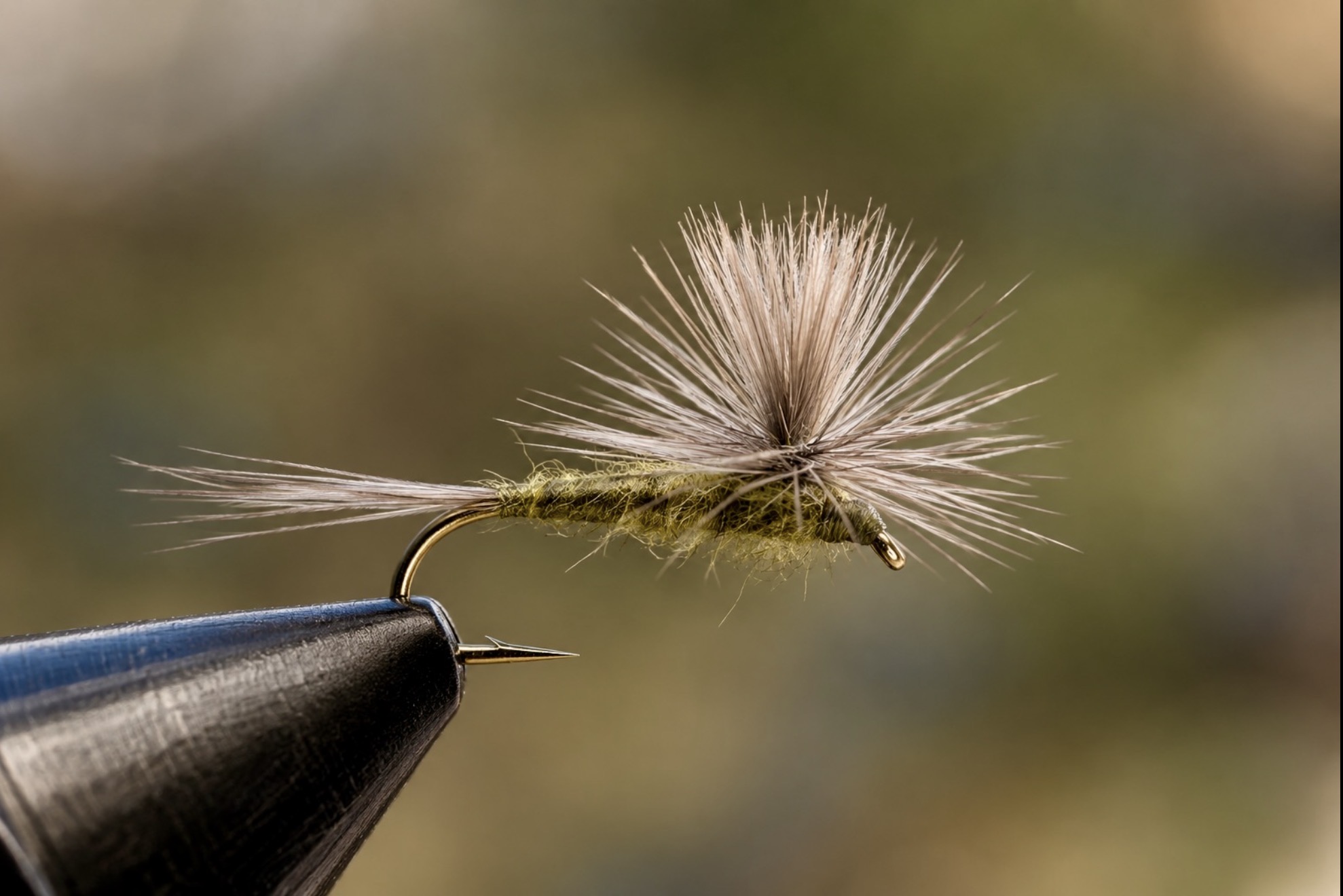
Dry Fly · Size 20
Small fly, easy to see.
Dun body, light post, sparse hackle — small enough to match the naturals and visible enough to track in flat evening light. Fish it alone on 6X to rising fish, or trail it behind a larger dry when searching.
See live conditions on the Live Report →Upper Delaware River fishing report, covering the West Branch, East Branch, Main Stem, and Beaverkill & Willowemoc. Flows, hatches, technique, and today’s watch items — everything you’d want to know before you string up a rod, gathered from conditions across the watershed.